Goal
- Learn how three powerful pharaohs used art and image-making to build their public power.
- Explore ancient Egyptian burial and material culture around Halloween season.
Maverick Kings: Three Visionary Pharaohs of Egypt's Golden Age (Ann and Graham Gund Gallery)
Sarcophagus of Queen Hatshepsut (recut for her father, Thutmose I), Egyptian, Dynasty 18, about 1473–1458 BCE, painted quartzite — the only royal sarcophagus from the 18th Dynasty outside of Egypt
Statue of a Falcon (Horus of Nekhen), Egyptian, Dynasty 18, reign of Amenhotep III, about 1390–1352 BCE, granodiorite, nearly six feet tall
Sculpted portrait of King Tutankhamen (son of Akhenaten), Egyptian, Dynasty 18 — check current gallery label to confirm exact object on view (a related MFA-owned sandstone head of Tutankhamen exists in the collection, accession 11.1533)
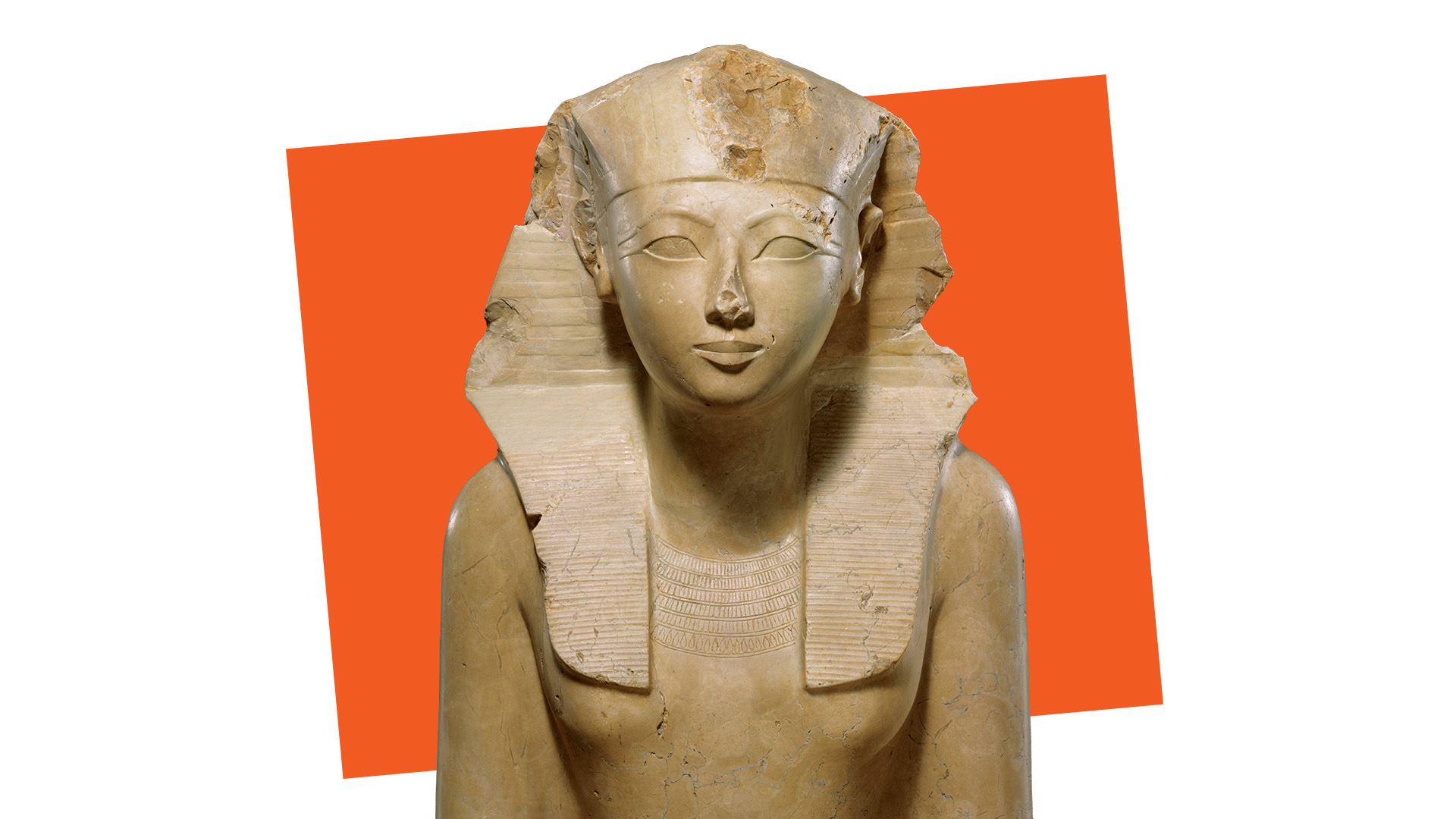
Hatshepsut's images were smashed and her name erased after her death — why do you think someone would want to erase a ruler from history?
Activity
Halloween special — "build your own royal symbol": look at how each pharaoh used specific symbols (falcon, sun disk, headdress) to show power, then design your own personal symbol/crest.
At-home project
Design a Halloween-appropriate "mummy case" or sarcophagus for yourself — decorate it with symbols that represent who you are, the way Egyptian art represented pharaohs.
Sources
Source: Maverick Kings · MFA Boston (on view 9/6–12/6/2026)
Also Visit: Mummies (permanent gallery)
A perennial family favorite and a natural Halloween-week pairing with Maverick Kings — check the current gallery label for which mummies and coffins are on view that day.
Source: Mummies · MFA Boston