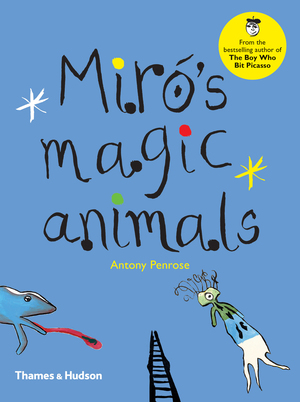
Introduction
Exhibition: Picasso, Miró, Dalí: Unbound · Lois B. and Michael K. Torf Gallery (Gallery 184) · Aug 1, 2026 – Jan 24, 2027
Goal
- Learn what a livre d'artiste (artist's book) is — how Miró, Picasso, and Dalí turned a book into art you can hold, page through, and read.
- Follow Joan Miró's story: from a quiet boy in Barcelona to an artist who said he wanted to "assassinate painting" and invented his own alphabet of stars, birds, eyes, and moons.
- Practice reading Miró's visual language — line, bright color, and symbol — and see how pictures and poetry share a page.
livre d'artiste — a 'book' that's actually a rare piece of art. Some were printed in editions as small as 53 or 110 copies. The one you're looking at right now might be copy number 1, or number 72 — like a trading card, every copy has its own number
Featured work
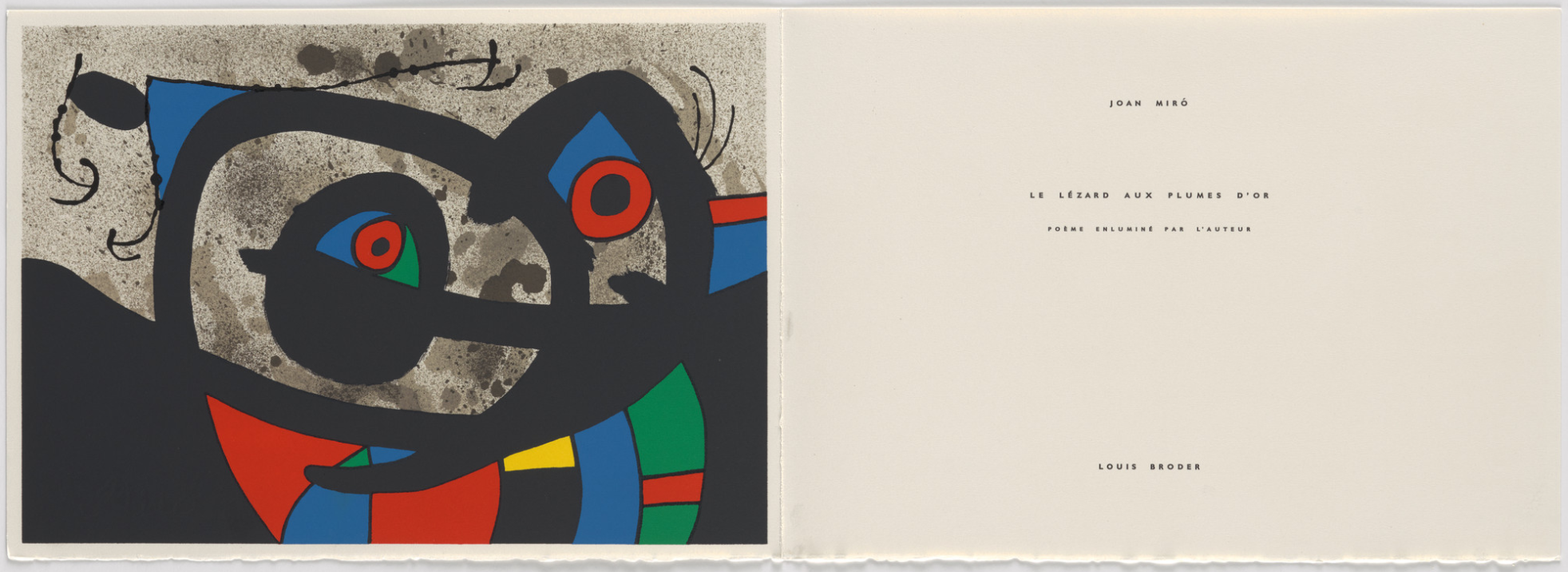
Le Lézard aux plumes d'or (The Lizard with Golden Feathers)
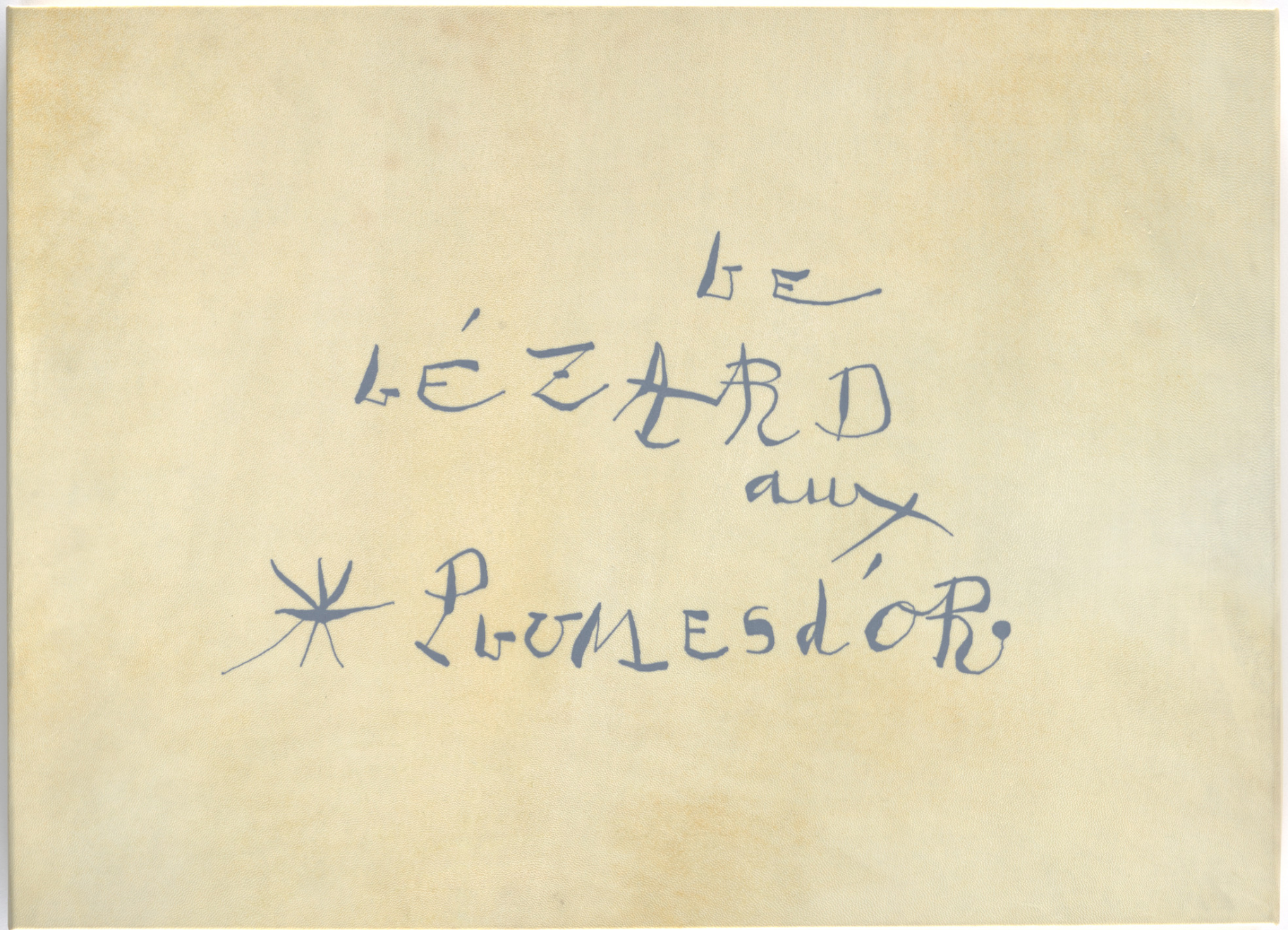
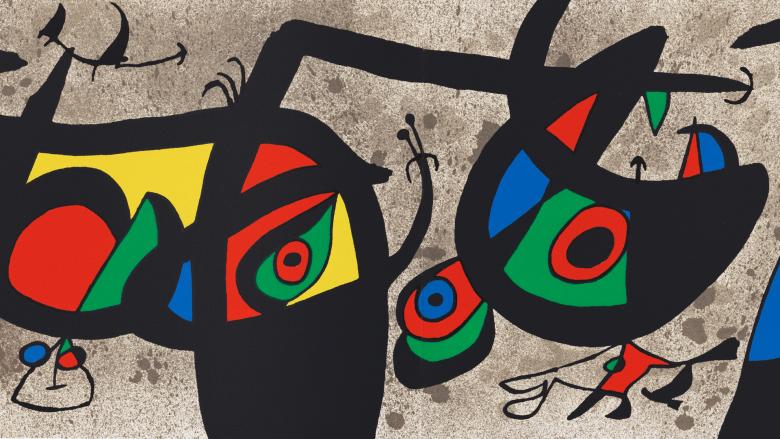
Miró wrote the poem and made the pictures. The "lizard with golden feathers" is an invented creature — half reptile, half bird — and Miró fills the pages with floating shapes, splashes of red, yellow, blue, green, and black calligraphy that dances between the words. Words and images are printed together so you can't tell where the poem ends and the drawing begins.
lithography is "the easiest type of printmaking for an artist to learn, and the hardest to explain"
Miró's story
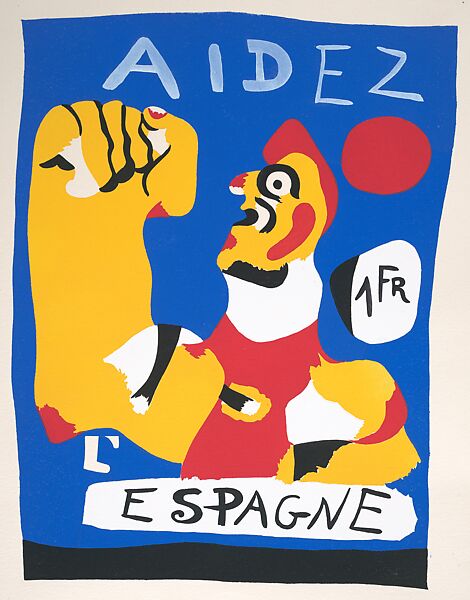
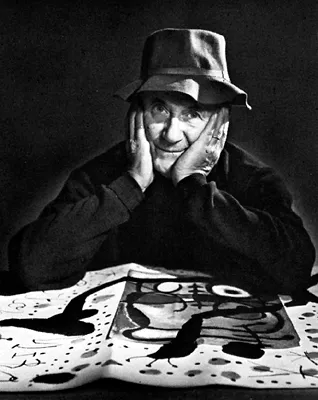
- Barcelona, 1893. Joan Miró is born into a family of craftspeople — his father a goldsmith and watchmaker. He is a shy, dreamy child who struggles at school but loves to draw.
- A false start. To please his parents, he takes an office job as a clerk. He hates it, gets sick, and while recovering at the family farm in Mont-roig he decides to be an artist no matter what.
- Paris, 1920s. Miró moves to Paris and meets the Surrealists — poets and painters who trust dreams, chance, and the imagination. He begins painting from hunger and daydreams, letting shapes appear on the canvas almost by themselves.
- "Assassinate painting." Miró wanted to break the old rules of fancy oil painting. He kept his colors pure and bright and built a private set of symbols: a star, a crescent moon, a bird, a single staring eye, a ladder reaching to the sky.
- Words + pictures. Miró loved poetry all his life and called some of his paintings "poem-paintings." Working on artist's books like Le Lézard aux plumes d'or let him do both at once — write and draw on the same page.
- A long life of work. Miró made paintings, sculptures, ceramics, huge murals, and more than 250 illustrated books before he died in 1983, at age 90, on the island of Mallorca.
Why is Miró's work so abstract — why can't you recognize the animal?
Miró uses only a few colors and very simple shapes. Point to one mark on the page — is it a letter, a creature, or both? How does Miró make a flat page feel like it's moving?
Miró once said a book should have 'the dignity of a sculpture carved in marble.“the book was the art, not an illustration of it.
1. He wasn't trying to make it look "right"
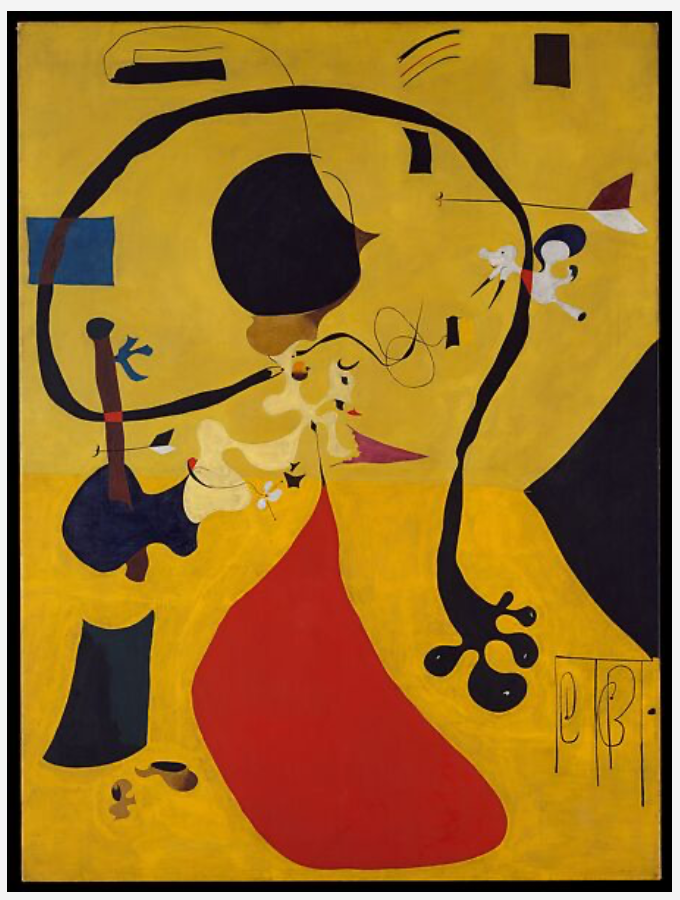
As a young artist, Miró famously said he wanted to "assassinate painting." That doesn't mean he hated painting — it means he wanted to destroy the old standard of judging art by how accurately it copied reality: the Renaissance rulebook of precise perspective and realism.
2. He wasn't painting what he saw — he was painting what he dreamed or felt
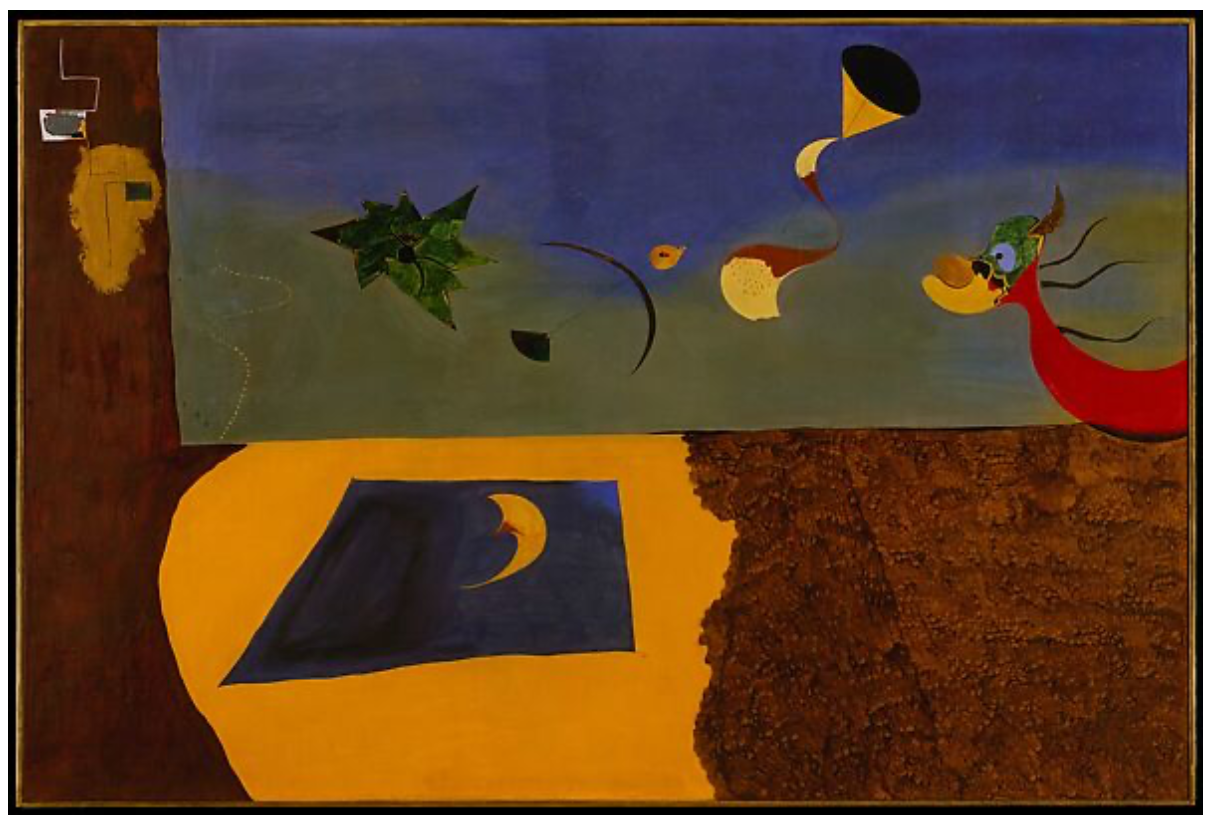
Miró was deeply shaped by Surrealism, which held that the subconscious and dreams were more true than rational observation. Many of his works look like something a child might scribble in an unconscious state, with no aesthetic calculation at all. So when he painted a lizard, he wasn't sketching a real lizard from life — he was translating some feeling about a lizard, some fragment of a dream, into shapes.
3. "Biomorphic" forms — alive-looking, but not any specific creature
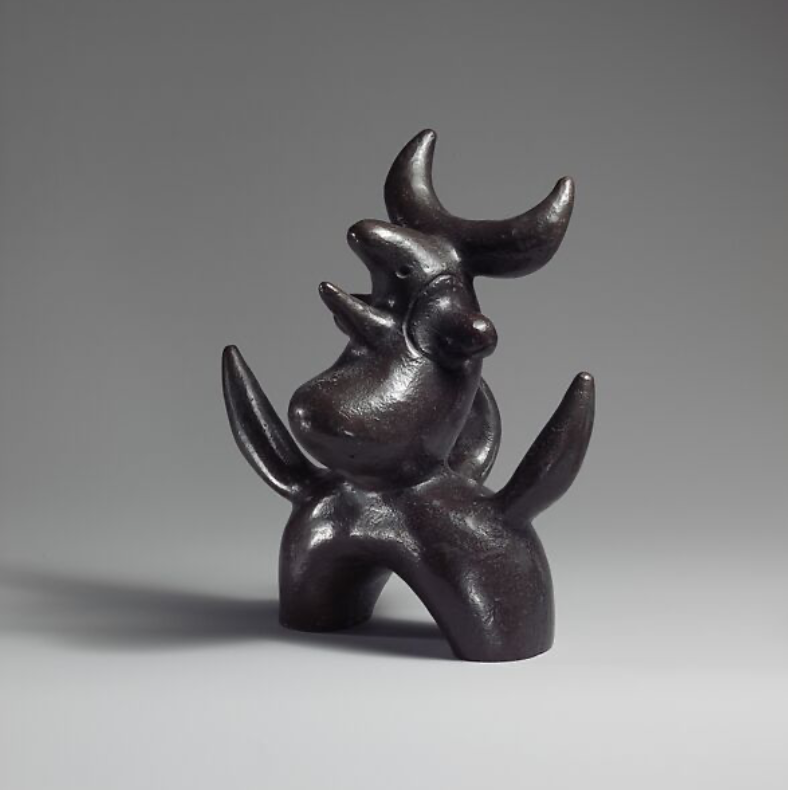
Art history calls this kind of shape a biomorphic form. The word doesn't mean "a life form" — it means the tendency to carry the appearance or quality of a living thing. In other words: the shape makes you feel it's alive, but it deliberately doesn't correspond to any one nameable animal. That's exactly Miró's trick — simultaneously recognizable and not.
Interestingly, Miró himself resisted the label "abstract." He insisted his paintings weren't abstract at all, but representational — faithful records of the dream images in his head. It's just that this "reality" happened inside the subconscious, not in the world you and I can see.
4. He was inventing his own private alphabet
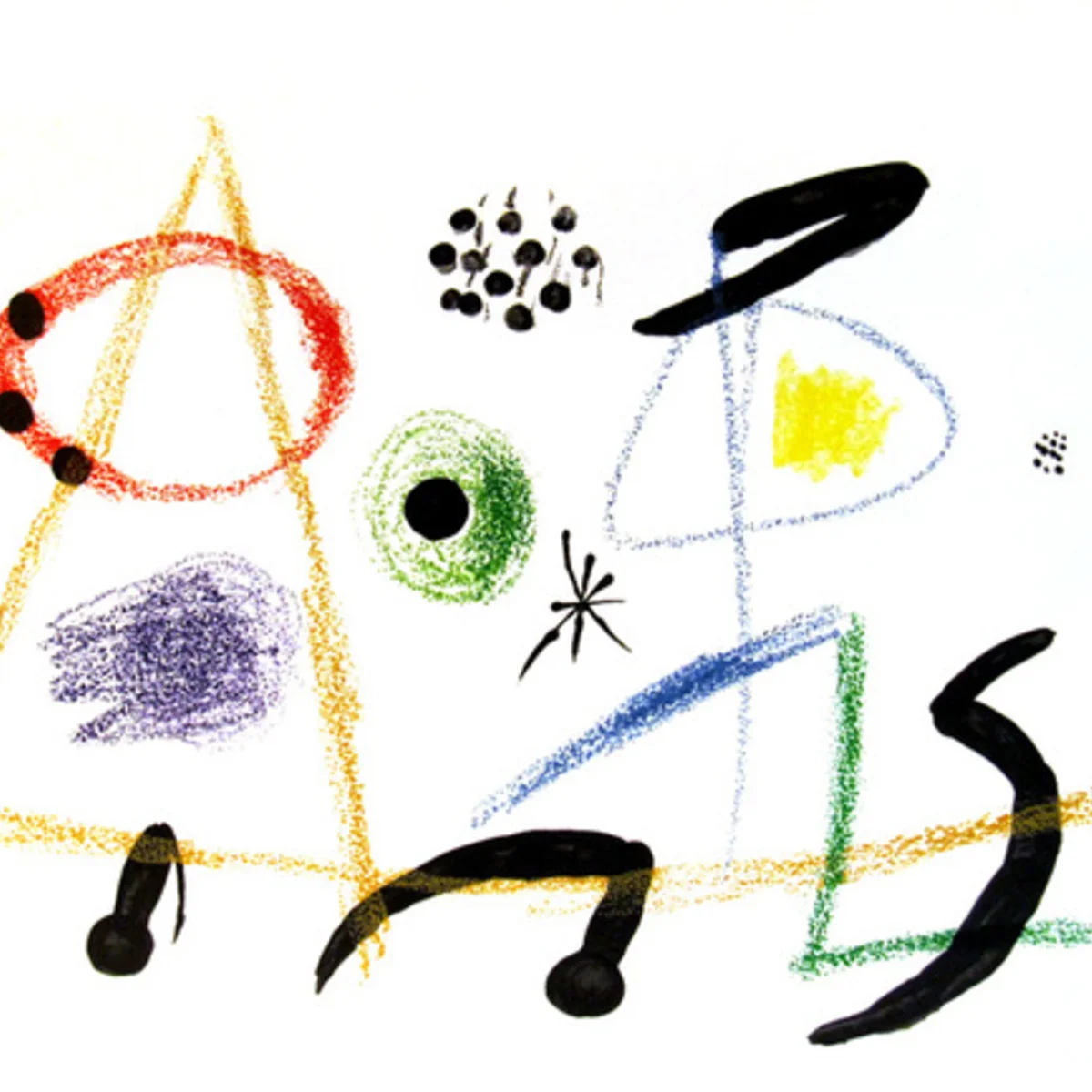
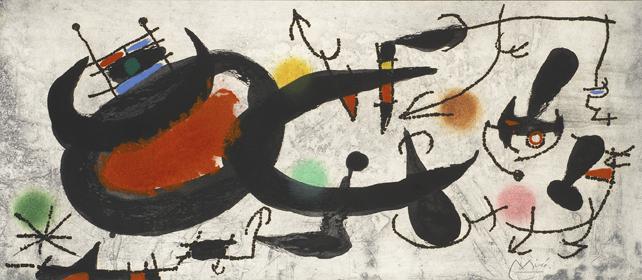
Japanese Calligraphy Influences
In 1968, Miró himself provided a written inventory detailing his personal dictionary of signs. Some of his most frequent and celebrated symbols include:
• The Escape Ladder: Represents freedom, a vehicle for breaking limits, and a bridge linking the earthly realm to the cosmic universe.
• Stars and the Moon: Often used to ground his works in a cosmic, dreamlike atmosphere.
• Birds and Flight: Symbolize absolute freedom, imagination, and the connection between the heavens and the earth.
• Eyes and Dots: A single dot with radiating rays typically represents or a cosmic watcher observing an unseen reality.
• Three Hairs: Miró would often reduce human figures or animals to a single line or shape crowned by exactly three hairs, symbolizing life.
At-home project
Prompt: “large birds, snakes, and strange creatures of the night.”
Write three lines of your own poem about your invented creature, then draw it (maybe on textured paper) so the words and the picture overlap on the same page.