Introduction
Main thread 1 — From seeing to feeling: How do artists move from naturalistic color toward expressive color, abstraction, and even spiritual meaning?
Main thread 2 — One object, many possibilities: A tree can be painted as a believable tree, a pattern, a feeling, a symbol, or almost pure structure.
Student goals
- Notice what changes when artists stop trying to make color look exactly "real."
- Compare four very different ways of using the same subject: a tree.
- Describe what each artist keeps, changes, exaggerates, simplifies, or removes.
- Understand that abstraction is not simply "less realistic" nor is it better or worse than traditional representational art — it can communicate feeling, rhythm, structure, or an idea in different ways/focuses.
Question to carry through the whole visit:
Artists gradually give up some of these "realistic" tools. What do they gain when they stop trying to copy exactly what the eye sees?
Warm-up: What does "realistic" color do?
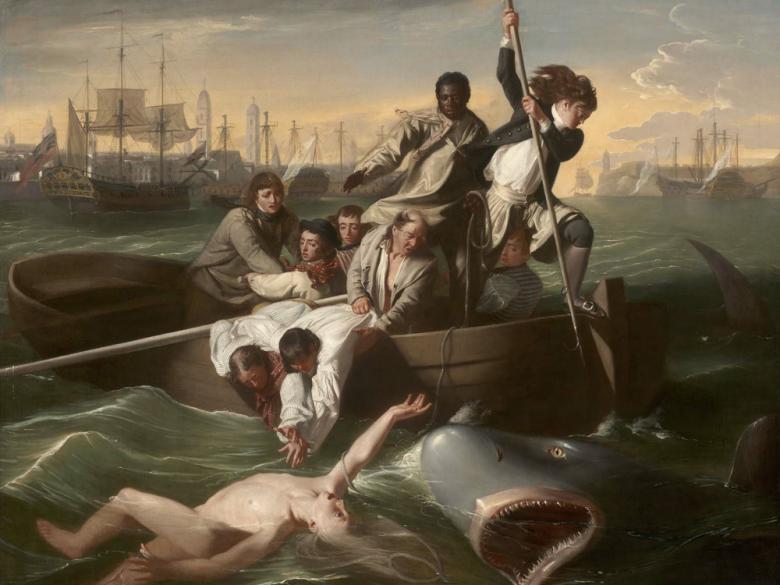
At John Singleton Copley's Watson and the Shark (1778), ask students to look closely at skin, water, sky, cloth, and shadow.
What does realistic color do?
- Make things look solid: gradual changes from light to dark help faces, arms, cloth, and objects feel three-dimensional rather than flat.
- Show light and shadow: colors shift depending on where the light hits. A "skin color" or a "blue sky" is never just one color.
- Create depth: colors often become softer, grayer, or less contrasty in the distance, helping the space feel deep.
- Describe material: artists use different color relationships to make skin look different from water, wood, metal, or cloth.
- Make the scene believable: color follows our experience of the visible world, so we accept the painted space as convincing.
- Hide the paint a little: smooth blending encourages us to notice the person, water, or sky before we notice individual brushstrokes.
Four Trees: One Object, Four Choices|Ruisdael → Monet → Gauguin → Mondrian
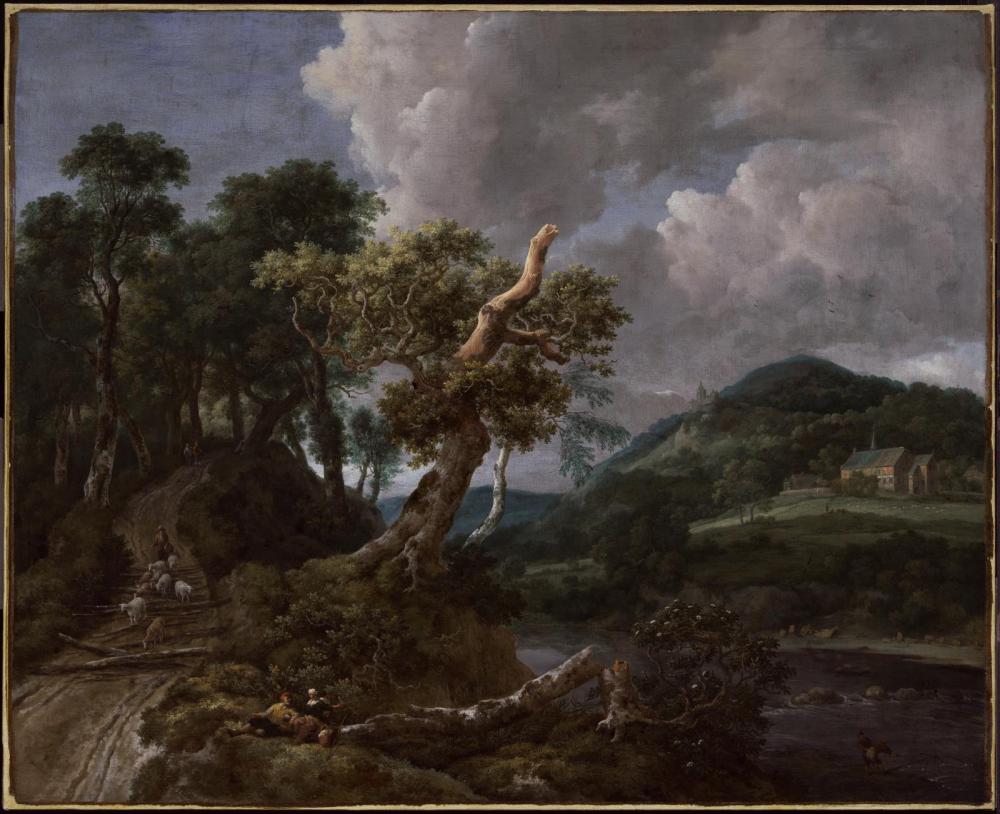
1. Ruisdael — A tree that still feels real, but already carries meaning
The tree is carefully observed: bark, branches, depth, weather, and distance all help us believe in the landscape. But Ruisdael also makes the broken tree unusually dramatic. It becomes more than scenery — it can suggest nature's force, damage, age, and the cycle of life and death.
What to notice: naturalistic color, believable depth, strong light/dark contrast, detailed structure.
- Why do you think the artist chose a damaged tree instead of a perfect one?
2. Monet — A tree becomes light, wind, and pattern
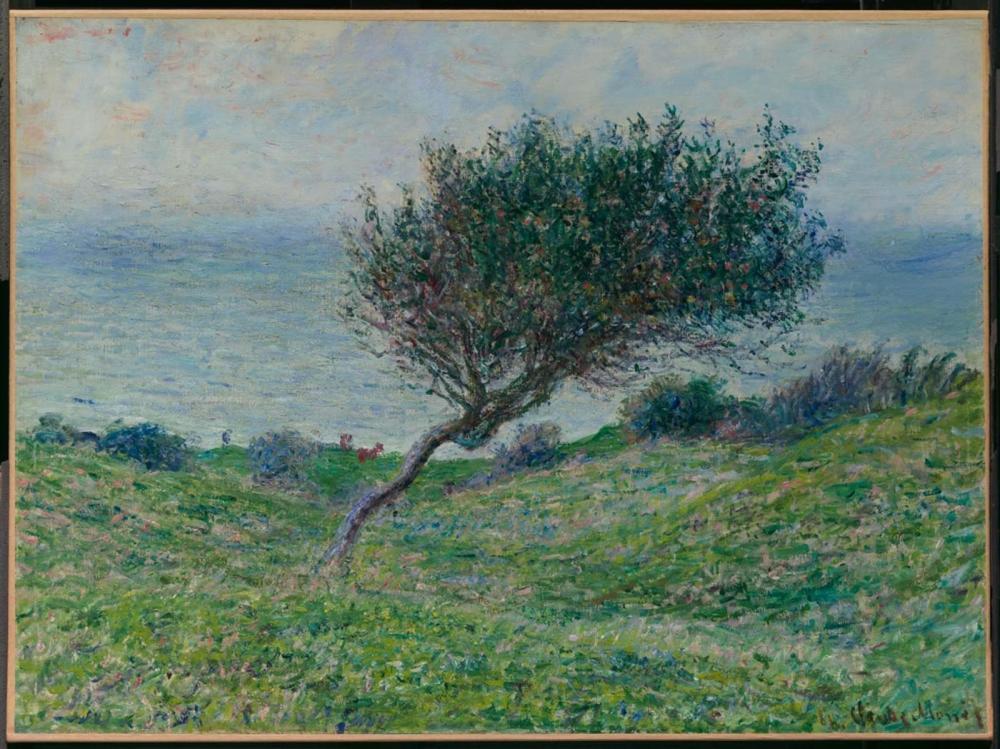
Monet keeps the tree recognizable, but he loosens its edges and reduces solid form. The hazy horizon and repeated brushstrokes make the tree feel less like a carefully modeled object and more like part of an atmosphere of wind, light, and movement.
What changes from Ruisdael: less detail, softer depth, more visible brushwork, more attention to the whole surface pattern.
- What direction does the whole painting seem to move?
- Is Monet painting the tree itself, or the feeling of being near this tree on a windy coast?
3. Gauguin — A tree becomes shape, color, and mood
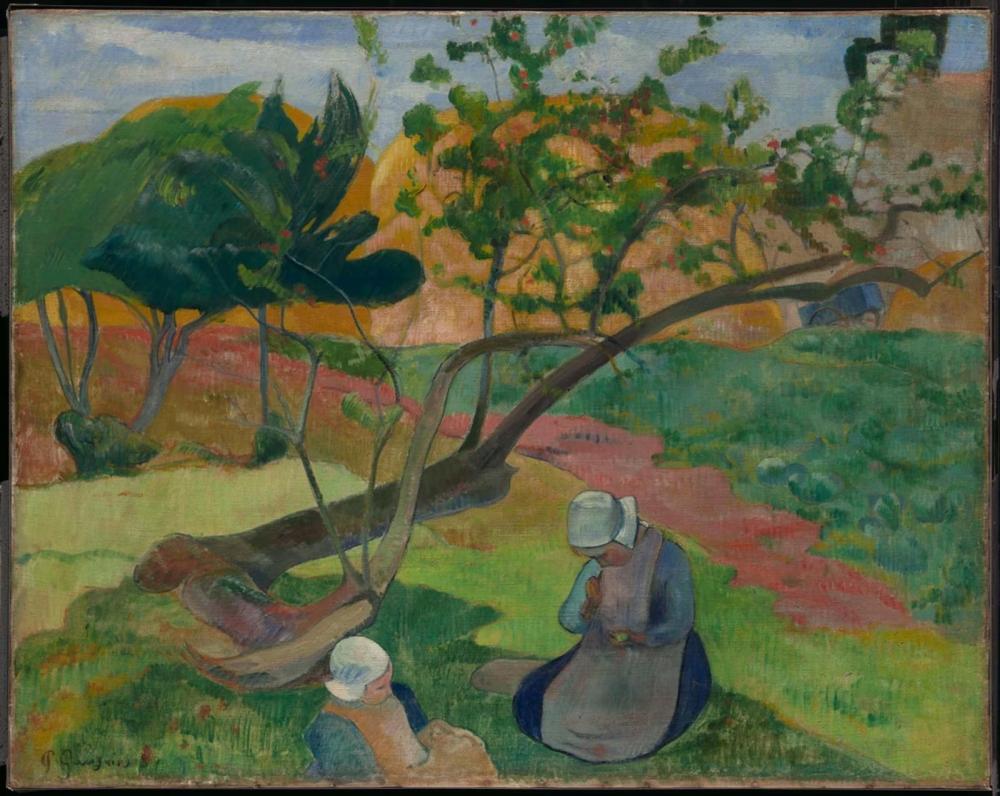
Gauguin painted this work in Brittany, a rural region of France that he saw as very different from modern Paris. He was interested in making paintings feel simpler, more symbolic, and more emotionally powerful.
Instead of carefully copying natural light, he used flattened space, strong outlines, simplified shapes, and heightened color. The tree is still recognizable, but color is no longer only describing what the eye sees — it also helps create mood and meaning.
What changes from Monet: less focus on changing light, more focus on bold color, clear shapes, and emotional effect.
- Which colors look "real" and which feel invented or exaggerated?
- What shapes repeat across the tree, land, and figures?
4. Mondrian — When the tree becomes structure
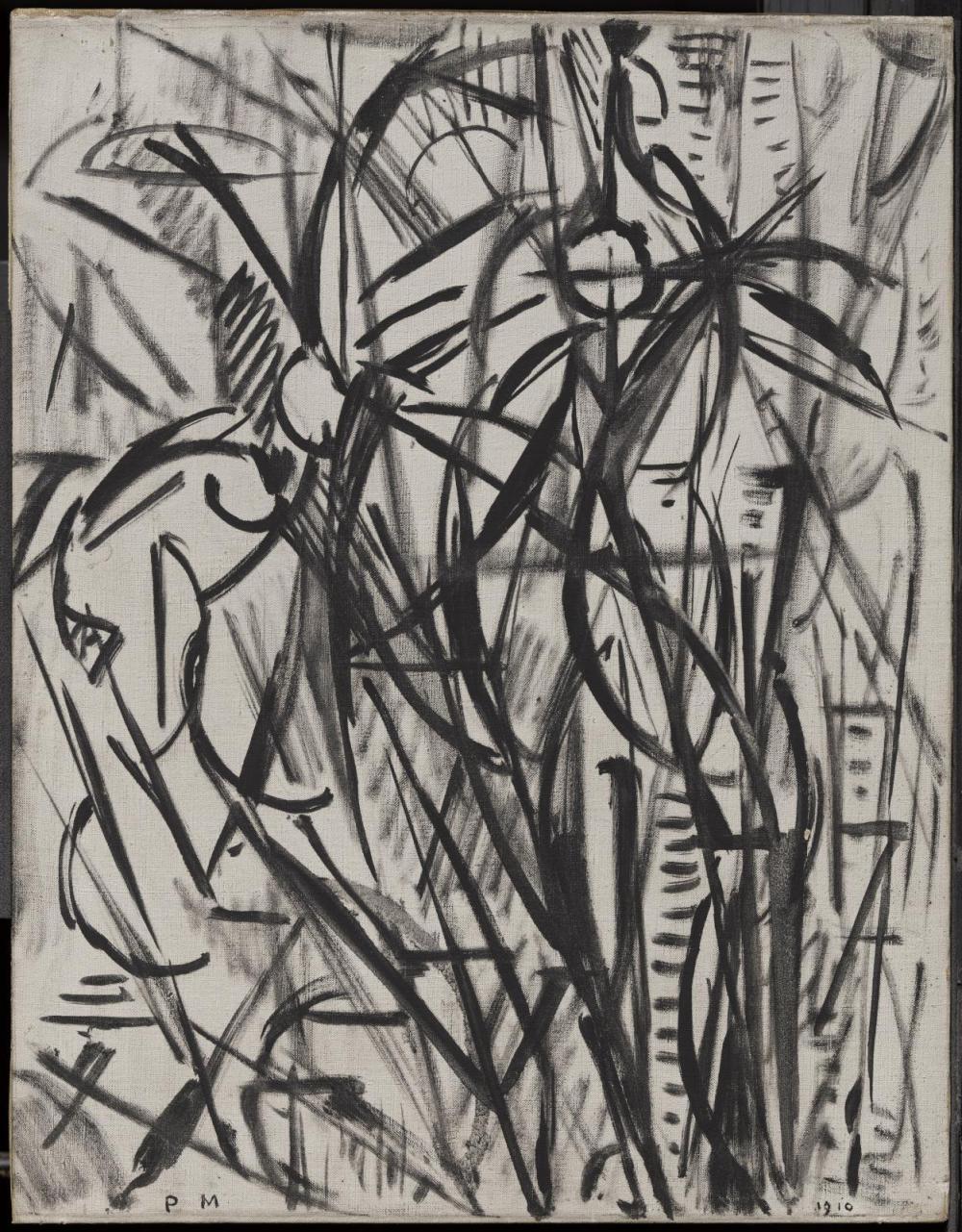
In Eucalyptus (compositional study) (1912), Mondrian simplifies the tree into an organized network of lines, directions, and intervals. The subject is still a tree, but the painting asks us to notice its underlying structure rather than leaves, bark, or natural color.
Mondrian's later abstraction was also connected to his interest in Theosophy and the idea that art could reveal a deeper order beneath visible appearances.
"What if the artist is not painting what the tree looks like, but the invisible pattern that holds it together?"
- Which lines still make you think of trunk, branch, growth, or movement?
- Does this feel more like a tree, a map, a skeleton, or a rhythm?
At-home project
Choose one tree from your neighborhood, a photo, or your imagination. Make three small versions:
- Observe it: use believable color and detail.
- Express it: change color, simplify shape, or exaggerate movement to show a feeling.
- Abstract it: reduce the tree to lines, shapes, rhythm, or structure.
Book!
Kandinsky’s story!
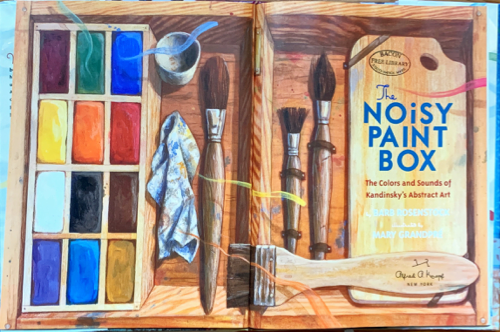 Shared in class